
Remove the pCAM train. Keep control of the material.
Conventional NMC and LMR production first creates a precursor cathode active material, or pCAM. That route requires precipitation, filtration, washing, drying, lithium addition, and multiple material transfers before the final cathode powder is formed.
Versa begins with a homogeneous solution containing the target material inputs. Controlled atomization creates droplets with the intended composition. Rapid thermal conversion forms powder, and the finishing steps develop the required crystal phase, particle morphology, density, and electrochemical response.
The result is a shorter flow sheet — less equipment, no pCAM washwater stream, fewer material handoffs, and no need to purchase a separately manufactured pCAM.
Set the composition
Material inputs are dissolved and metered to the target chemistry before particles are formed.
Form the particles
Controlled atomization converts the feed into droplets that carry the intended elemental composition.
Convert spray to powder
Thermal conversion produces cathode powder without a separate pCAM precipitation, filtration, washing, and drying train.
Engineer the finish
Heat treatment and powder finishing control phase, morphology, particle-size distribution, density, and cell performance.
The right cathode depends on the application.
The manufacturing platform should not.
Nickel manganese cobalt
High-nickel NMC delivers the highest energy density of the mainstream cathode chemistries — the specific capacity that mobility and high-power cells depend on for range and performance. Nickel-rich composition and engineered particle morphology carry capacity, rate capability, and cycle life together.
Lithium- and manganese-rich
Manganese-rich chemistry that reaches the specific capacity energy-dense cells need while reducing dependence on nickel and cobalt. Abundant, low-cost manganese carries the balance of energy density and materials cost that mobility, defense, and advanced cell programs are moving toward.
View development data ↓Lithium iron phosphate
Cobalt-free iron-phosphate chemistry trades peak energy density for long cycle life, thermal stability, and low materials cost. Abundant iron makes it the durable, economical choice for stationary storage, resilient power systems, and long-life mobility.
Exceptional performance.
Lithium- and manganese-rich chemistry reaches high specific capacity while shifting composition toward abundant manganese and away from nickel and cobalt. The result is lower materials cost and reduced supply-chain exposure — without giving up the energy density that mobility and defense cells demand.
Material development does not end at the powder.
Versa operates a cathode development and cell-testing laboratory in Austin. The team runs gram-to-kilogram material campaigns, characterizes the resulting powder, fabricates test cells, and feeds the results back into the next material and process iteration.
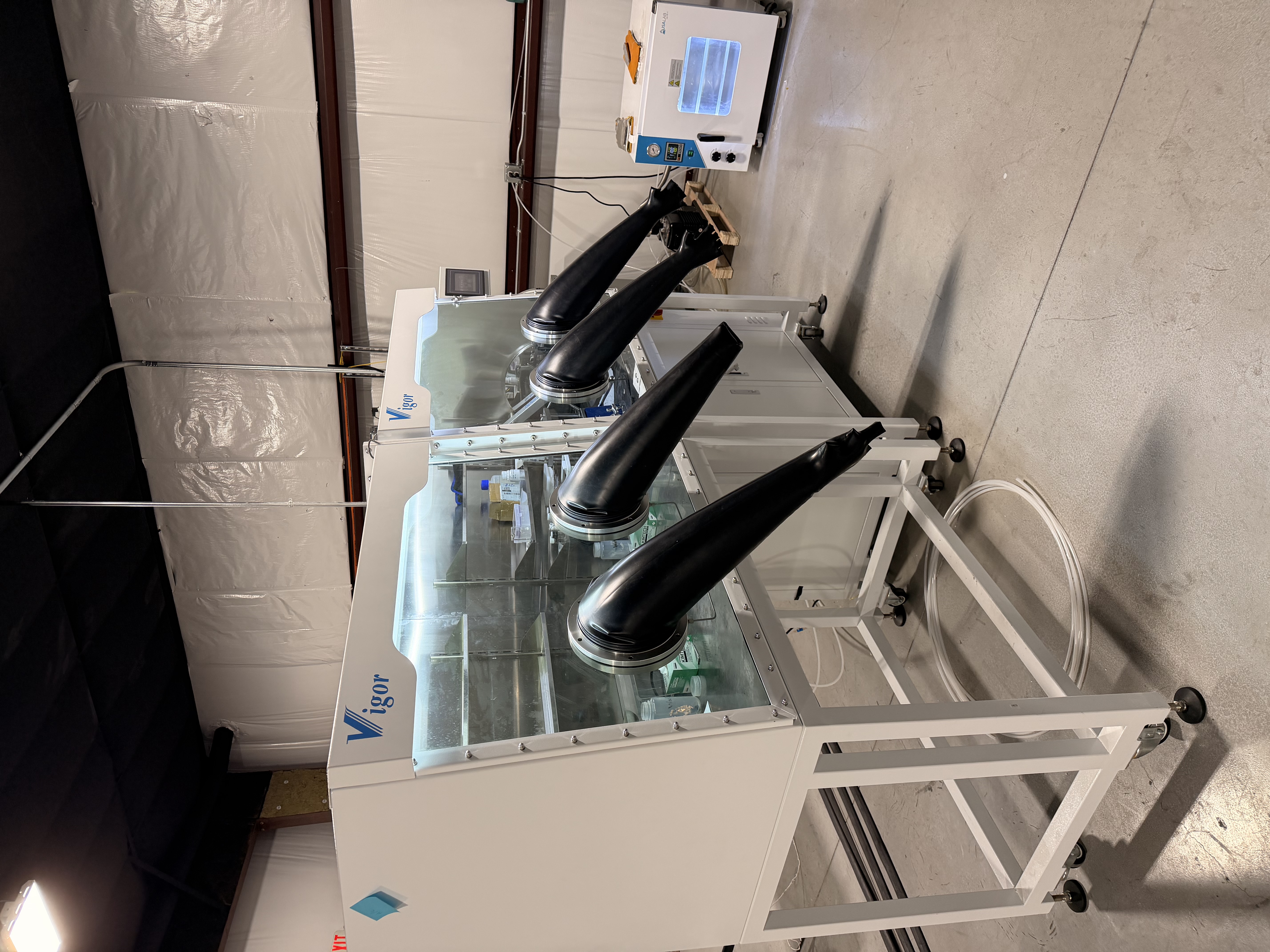
Develop
Translate cell requirements into target composition, phase, morphology, particle size, density, and electrochemical release criteria.
Make and measure
Synthesize material, characterize it by XRD, SEM, particle-size analysis, BET, and density, then test it electrochemically.
Scale and qualify
Move from laboratory campaigns to repeatable lots, practical electrode loading, full-cell testing, and a customer-specific qualification package.
Tell us the spec. We'll engineer the material.
Versa works with cell manufacturers, OEMs, cathode suppliers, and supply-chain partners on custom material specifications, sample programs, qualification plans, and manufacturing scale-up.